





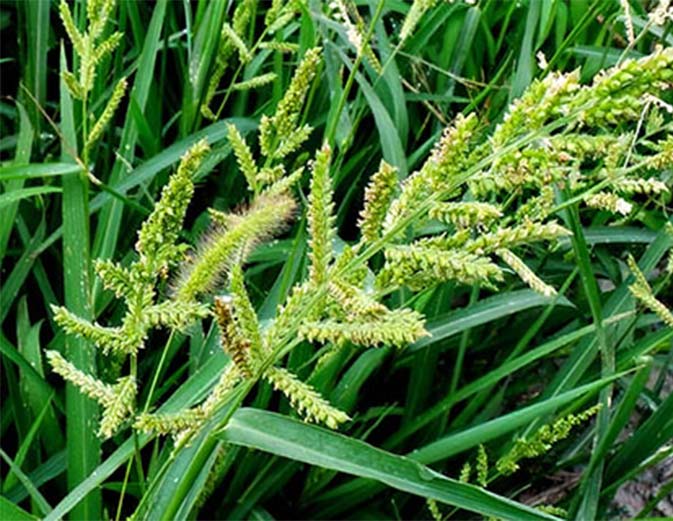

Best Practices for Agricultural Weed Management: From Prevention to Post-Emergence Control
Apr.20.2026
Table of Content
[Hide]
Introduction
Weed management is a foundational component of modern agriculture and plays a decisive role in determining crop yield, production cost, and long-term soil health. Weeds compete with crops for essential resources such as light, nutrients, water, and space, often reducing productivity even before visible symptoms appear.
According to the Weed Science Society of America, weeds are responsible for approximately 34% of global crop yield losses, making them the single most damaging biological constraint in agriculture worldwide.
As agricultural systems become more intensive and herbicide resistance continues to increase, effective weed management must shift from simple control methods to integrated, multi-layered strategies.
What Is Agricultural Weed Management?
Agricultural weed management is the systematic integration of preventive, cultural, mechanical, and chemical strategies designed to control weed populations and minimize their impact on crop productivity and farm sustainability.
Understanding Weed Pressure in Modern Agriculture
Weed pressure varies significantly depending on crop type, geography, and management practices. However, the biological impact is consistently severe across most farming systems.
Studies indexed by the National Center for Biotechnology Information indicate that uncontrolled weeds can cause 20% to 50% yield loss in major staple crops, depending on infestation severity and timing of control.
Weeds affect crops in four primary ways:
Competing for soil nutrients before crops can absorb them
Blocking sunlight and reducing photosynthesis efficiency
Depleting soil moisture in water-limited environments
Interfering with harvesting and reducing operational efficiency
These combined effects make early and structured management essential.
Integrated Weed Management (IWM): The Global Standard
Modern agriculture relies on Integrated Weed Management (IWM), a scientifically supported framework promoted by the Food and Agriculture Organization.
IWM is not a single method but a system that combines multiple strategies to reduce weed pressure while minimizing environmental impact and resistance development.
Core Components of IWM
| Strategy Type | Purpose | Outcome |
| Prevention | Avoid weed introduction | Long-term reduction in seed bank |
| Cultural control | Strengthen crop competitiveness | Natural suppression |
| Mechanical control | Physical removal | Immediate reduction |
| Chemical control | Herbicide-based management | Scalable efficiency |
| Monitoring | Field observation & decision-making | Precision control |
Stage 1: Prevention – The Most Cost-Effective Strategy
Prevention is the first and most important step in weed management because it directly reduces the soil weed seed bank.
Key preventive practices include:
Using certified weed-free seeds
Cleaning machinery before field movement
Implementing crop rotation systems
Using cover crops to suppress weed germination
Applying stale seedbed techniques before planting
FAO extension data suggests that effective preventive practices can reduce early-season weed emergence by 30–40%, significantly lowering the need for chemical intervention.
Stage 2: Critical Period of Weed Competition
Crops are most vulnerable during early growth stages. This period is known as the “critical period of weed competition,” during which weed interference causes irreversible yield loss.
Key insights:
Most crops are highly sensitive during the first 2–6 weeks after emergence
Early weed competition reduces root development and canopy formation
Delayed control leads to permanent yield penalties even after weeds are removed
This stage represents the highest return on investment in weed control programs.
Stage 3: Cultural and Mechanical Control Strategies
Cultural and mechanical methods are essential components of a balanced weed management system.
Cultural Practices:
Increasing crop planting density
Using competitive crop varieties
Adjusting planting dates to avoid peak weed emergence
Mechanical Practices:
Inter-row cultivation
Manual weeding
Strategic tillage operations
These methods help reduce weed pressure naturally and delay reliance on chemical control.
Stage 4: Chemical Control and Optimized Herbicide Use
Herbicides remain a core tool in modern agriculture due to their efficiency and scalability. However, their effectiveness depends heavily on correct selection and timing.
A well-structured herbicide application strategy considers:
Weed species composition
Growth stage of weeds
Environmental conditions (temperature, rainfall, humidity)
Crop tolerance and safety margins
Application Timing Framework
| Application Type | Timing | Function |
| Pre-emergence | Before weeds emerge | Prevent germination |
| Early post-emergence | Small weeds | Maximum efficacy |
| Late post-emergence | Mature weeds | Corrective control |
Incorrect timing can reduce herbicide performance by up to 30%, according to agricultural extension studies.
Stage 5: Post-Emergence Control Optimization
Post-emergence control is highly dependent on weed size and environmental conditions.
Key principles include:
Smaller weeds are significantly easier to control
Early post-emergence applications deliver the highest efficacy
Late-stage weeds require higher doses and are harder to eliminate
Environmental conditions such as humidity and temperature also affect herbicide absorption and translocation.
Herbicide Resistance: A Growing Global Challenge
Herbicide resistance is one of the most serious long-term threats to global agriculture.
According to the Weed Science Society of America, there are over 500 confirmed cases of herbicide-resistant weeds worldwide, involving more than 260 species.
Resistance Prevention Strategies:
Rotate herbicides with different modes of action
Avoid repeated use of the same active ingredient
Combine chemical and non-chemical control methods
Use integrated weed management systems
Resistance management is essential to preserve herbicide effectiveness over time.
Spray Technology and Application Accuracy
Application technology plays a crucial role in determining herbicide success. Key technical factors include:
Droplet size and spray uniformity
Nozzle selection and pressure settings
Wind speed and temperature conditions
Spray coverage consistency
Field studies show that improper application techniques can reduce herbicide effectiveness by 20–30%, even when the correct chemical is used.
Precision spraying systems are increasingly adopted to improve accuracy and reduce waste.
Role of Agricultural Innovation
A modern crop science company integrates advanced technologies into weed management systems, including:
AI-based weed detection and mapping
Drone-assisted field monitoring
GPS-guided variable-rate spraying
Data-driven decision support systems
These innovations enable farmers to reduce chemical usage while improving weed control efficiency and sustainability.
Future Trends in Weed Management
The future of weed control is moving toward integration and precision rather than chemical intensity.
Key trends include:
Precision agriculture and site-specific herbicide application
Reduced chemical dependency through integrated systems
Climate-adaptive weed management strategies
Digital monitoring and predictive analytics
Conclusion
Agricultural weed management requires a structured, integrated approach combining prevention, early intervention, cultural practices, and optimized herbicide use. By understanding weed biology, improving application timing, and adopting resistance management strategies, farmers can significantly reduce yield losses and improve long-term sustainability. Integrated Weed Management provides a scientifically supported framework for achieving efficient, reliable, and environmentally responsible weed control in modern agriculture.
FAQ Section
1. What is the most effective weed management method?
Integrated Weed Management (IWM), which combines multiple strategies, is the most effective and sustainable approach.
2. Why is early weed control so important?
Because early weed competition occurs during critical crop growth stages and causes irreversible yield loss.
3. How can herbicide resistance be prevented?
By rotating herbicides, using combinations, and integrating cultural and mechanical methods.
4. What affects herbicide performance?
Weed size, environmental conditions, application timing, and spray technology all influence effectiveness.
5. Are herbicides still necessary in modern agriculture?
Yes, but they should be used as part of an integrated system rather than as a standalone solution.
References
1. Food and Agriculture Organization
2. Weed Science Society of America
3. National Center for Biotechnology Information
4. United States Environmental Protection Agency
References
Related Agrochemical Products
NIPPY® Nitenpyram 20%+Pymetrozine 60% 80%WP Insecticide
CLIMASHIELD® - Exclusive Bio-Stimulant to Boost Immunity and Enhance Stress Resistance
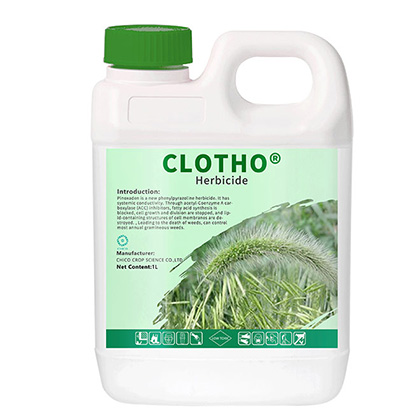
CLOTHO® Pinoxaden 5% EC Herbicide

CHICO® Fast Calcium
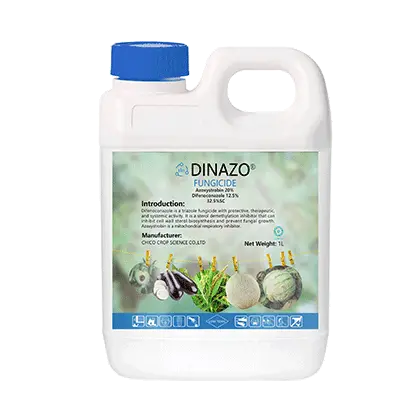
DINAZO® Azoxystrobin 20%+Difenoconazole 12.5% 32.5%SC Fungicide
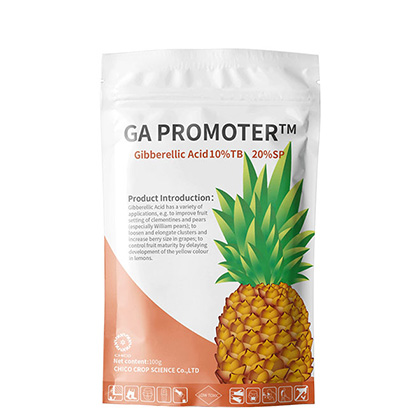
GA PROMOTER® Gibberellic Acid 10%TB, 20%SP Plant Growth Regulator
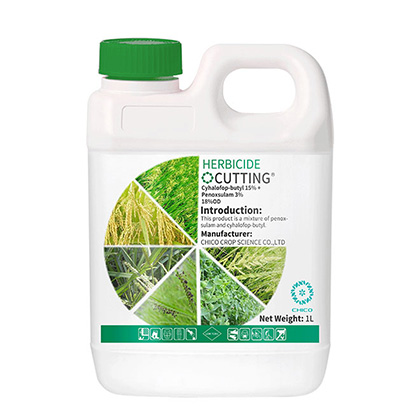
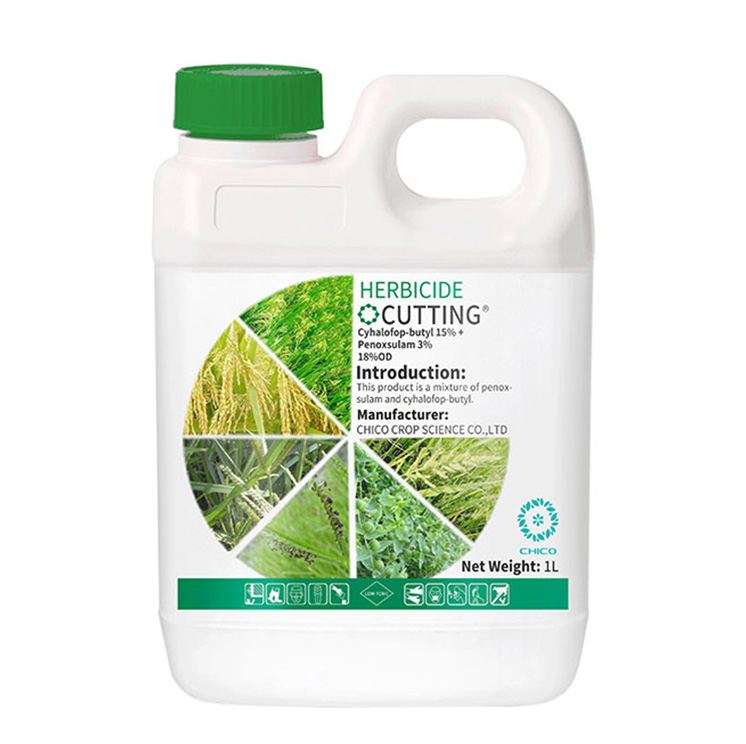
CUTTING® Cyhalofop-butyl 15%+Penoxsulam 3% 18% OD Herbicide
ACELA® Acetamiprid 2%+Lambda-cyhalothrin 1.5% 3.5%ME Insecticide